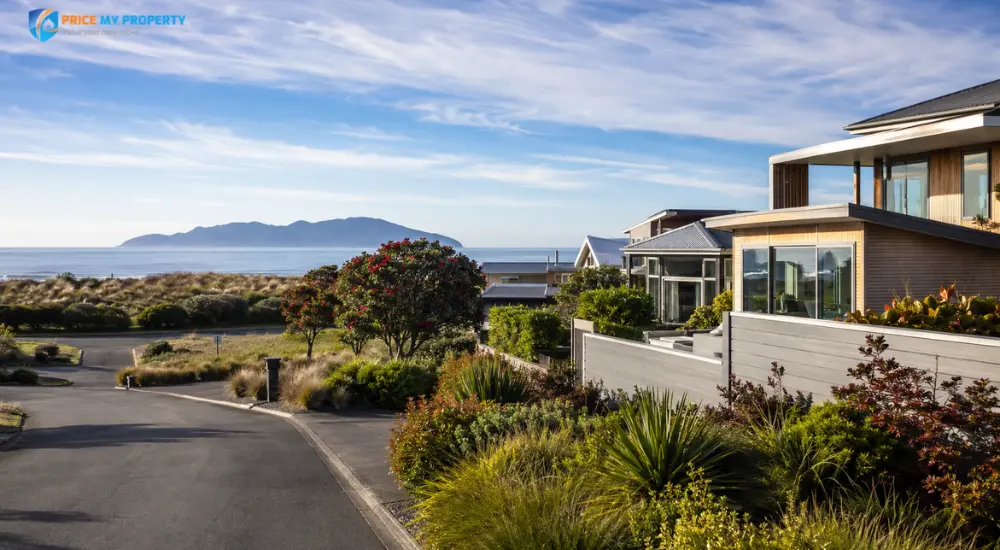
Kapiti Coast House Prices 2026: Suburb Value, Data and Seller Guide
Kapiti Coast house prices can be tricky to read because the district is not a single property market. A home in Paraparaumu, Waikanae, Raumati, Ōtaki, Te Horo or Paekākāriki can attract different buyers, price expectations and levels of competition. This guide explains how to understand Kapiti Coast property prices in 2026, how the main suburbs compare, and what homeowners should check before setting a selling price.
TL;DR: Kapiti Coast house prices in 2026
- Kapiti Coast house prices should be read suburb by suburb, not as one district-wide number.
- The district includes towns and local areas such as Ōtaki, Te Horo, Waikanae, Paraparaumu, Raumati and Paekākāriki, as shown in Kapiti Coast District Council’s local towns guide.
- Use Kapiti Coast District Council rating valuations for capital value (CV), land value (LV), and rates context, but do not treat a CV as today’s sale price.
- For ownership, easements, and title restrictions, check Toitū Te Whenua Land Information New Zealand (LINZ) property title guidance, as title details can affect buyer confidence.
- Broad online values are useful for context, but your property’s likely sale price depends on recent comparable sales, condition, land, title, location and current buyer demand.
Before relying on a suburb average, request a free Market Property Report from Price My Property to get a clearer view of where your home may sit in the local market.
How should Kapiti Coast house prices be read in 2026?
Kapiti Coast house prices in 2026 are best understood as a collection of smaller local markets. District-wide averages can help you understand the broad direction of the property market, but they do not explain what a specific home in Paraparaumu Beach, Raumati South, Waikanae or Ōtaki might sell for.
That is because different data sources measure different things. One website may show an average house value. Another may show a median sale price based on recently sold properties. A listing portal may show asking prices, while council data shows rating valuations. None of these figures is wrong on its own, but each one answers a slightly different question.
For homeowners, the important point is simple: local price data provides a starting point, not a final price. A renovated coastal home with good sun and strong street appeal may sit well above the suburb average. An older home needing work, a cross-lease property, or a house with title or consent issues may sit below it.
Kapiti Coast suburbs and towns covered in this guide
Kapiti Coast stretches along the lower west coast of the North Island, with several distinct towns and communities. Buyers often compare homes across nearby suburbs, so sellers need to understand not only their own suburb but also the areas competing for buyers’ attention.
| Area | Buyer appeal | Pricing angle |
| Paraparaumu | Main service centre, shops, transport, families and commuters | Larger local market with several micro-areas |
| Paraparaumu Beach | Coastal lifestyle, beach access and family homes | Often analysed separately from central Paraparaumu |
| Raumati Beach | Village feel, beach access and established homes | Strong lifestyle appeal |
| Raumati South | Coastal character and Queen Elizabeth Park access | Popular with lifestyle and commuter buyers |
| Waikanae | Train access, larger sections and downsizer appeal | Often attracts families, retirees and buyers looking for gardens and larger sections |
| Waikanae Beach | Coastal homes and lifestyle appeal | Useful to compare with other beach suburbs |
| Ōtaki | More northern Kapiti option with relative affordability | Different buyer pool from southern Kapiti |
| Te Horo and Peka Peka | Lifestyle, rural and coastal appeal | Lower sales volume means averages need care |
| Paekākāriki | Tightly held coastal village | Fewer sales can make data more variable |
For more detailed suburb-level information, Price My Property has separate guides on house prices in Paraparaumu and Raumati.
How Kapiti Coast house prices differ by suburb
Paraparaumu house prices
Paraparaumu is one of the main property markets on the Kapiti Coast. It attracts families, Wellington commuters, investors, downsizers and lifestyle buyers who want access to shops, schools, transport and local services.
However, Paraparaumu should not be treated as one identical market. Paraparaumu Central, Paraparaumu Beach and nearby areas such as Otaihanga can perform differently. A buyer looking for convenience near shops and transport may compare different homes with someone who prioritises beach access, views, or a larger section.
When reviewing Paraparaumu house prices, compare your property with recent sales in the most relevant part of the suburb. Bedroom count, land size, floor area, garaging, sun exposure, condition, and title type can all make a meaningful difference.
Raumati house prices
Raumati is usually split into Raumati Beach and Raumati South. Both areas share a strong coastal lifestyle appeal, but they can attract slightly different buyers.
Raumati Beach often appeals to people looking for village character, beach access, local shops and established family homes. Raumati South has its own relaxed coastal feel, with buyers often drawn to Queen Elizabeth Park, character homes and a quieter community atmosphere.
For sellers, the key is to avoid treating “Raumati” as an average. A well-presented Raumati Beach home may outperform a tired property in Raumati South, and vice versa, depending on land, condition, sun, and location.
Waikanae house prices
Waikanae is a broad market that appeals to families, commuters, gardeners, retirees and downsizers. Train access, larger sections, local amenities and a more relaxed pace can all support buyer demand.
Waikanae Beach should be considered separately from central Waikanae because coastal appeal, property type and buyer expectations can differ. Homes near the beach, reserves or desirable streets may not follow the same pattern as homes further inland.
Ōtaki house prices
Ōtaki often gives buyers a different entry point into the Kapiti Coast property market. It can appeal to first-home buyers, investors, retirees and people wanting more space for their budget.
However, Ōtaki Central, Ōtaki Beach, and surrounding rural or lifestyle areas should be carefully compared. A coastal home, a town property and a lifestyle block can sit in very different value bands.
Paekākāriki, Te Horo and Peka Peka house prices
Paekākāriki, Te Horo and Peka Peka are smaller or more specialised markets. They can attract strong lifestyle interest, but lower sales volumes mean online averages may fluctuate more than they do in larger suburbs.
For these areas, recent comparable sales are especially important. A single unusual sale can distort suburb-level data, so sellers should look closely at land size, condition, views, beach access, rural zoning, title details and depth of buyer demand.
Why do different websites show different Kapiti Coast property prices?
It is common to see several different numbers for Kapiti Coast property prices. That does not always mean one source is wrong. It usually means that each source measures a different type of value.
| Price type | What it means | Best used for |
| Average house value | A broad modelled value across an area | Market direction |
| Median sale price | The midpoint of sold properties | Recent sale evidence |
| Asking price | What sellers are advertising for | Current competition |
| CV or RV | Council rating valuation | Rates and valuation context |
| Market appraisal | A local estimate based on market evidence | Selling decisions |
| Registered valuation | A formal valuation by a registered valuer | Lending, legal or formal needs |
A CV can be helpful background, but it is not a live market appraisal. It may not reflect renovations, presentation, maintenance, buyer demand or changes in the market since the valuation date.
If you are preparing to sell, use online data as a guide, then request a free Market Property Report from Price My Property so your property can be considered against relevant local evidence rather than one broad suburb average.
What affects house prices on the Kapiti Coast?
Several local factors can affect Kapiti Coast property values. Location is one of the most obvious. Homes close to the beach, train stations, schools, shops, parks and medical services may attract different levels of demand from homes further away.
Condition also matters. Buyers often look closely at warmth, dryness, insulation, heating, ventilation, roof condition, cladding, drainage and maintenance. Coastal homes may face extra scrutiny because exposure to the weather can affect paintwork, joinery, roofing, and exterior materials.
Land and title can also influence price. A freehold home on a usable section may be viewed differently from a cross-lease property, a unit title, or a home with easements and restrictions. Buyers, lawyers and conveyancers may also check consents, code compliance certificates, LIM information and title records before going unconditional.
Presentation is another factor sellers can control. Clean, well-maintained, uncluttered homes usually give buyers more confidence. That does not always mean major renovations are needed. In many cases, small repairs, tidy landscaping, fresh presentation and clear documentation can make a bigger difference than expensive upgrades.
Is 2026 a good time to sell on the Kapiti Coast?
The better question is not just whether 2026 is a good time to sell, but whether your property is ready, priced correctly, and well positioned for the buyers currently active in your part of Kapiti.
Selling may make sense if you are downsizing, upsizing, relocating, releasing equity, moving closer to family or taking advantage of demand for your property type. Waiting may make sense if the home needs maintenance, paperwork is incomplete, presentation needs work, or your pricing expectations are not aligned with recent comparable sales.
Market conditions can also vary between suburbs. A home in Waikanae may face different levels of buyer demand than a home in Raumati South, Paraparaumu Beach or Ōtaki. That is why suburb-specific evidence matters.
If you are unsure whether to sell now or prepare first, start with a free Market Property Report from Price My Property to compare your home with recent local sales before making a decision.
How to estimate what your Kapiti Coast house could sell for
Start with suburb-level data, but do not stop there. Broad local price data can indicate the market backdrop, but it cannot determine the price of your individual property.
Next, check recent comparable sales. The best comparisons are usually homes in the same suburb or nearby micro-market with similar land size, floor area, number of bedrooms, condition, title, and location. Recent sales are more useful than old sales because buyer confidence, interest rates, stock levels and competition can shift.
Then review current listings. Active properties show what buyers can choose from right now. Asking prices are not proof of sale value, but they help you understand your competition.
You should also check the title, council and consent information early. This can reduce surprises during the sale process and help buyers feel more confident.
Once you have checked the broad market, request a free Market Property Report from Price My Property to turn suburb-level research into a more realistic property-specific selling range.
Selling tips for Kapiti Coast homeowners
Do not price your home based on one online number. A single estimate cannot fully account for your home’s sun, layout, maintenance, renovations, garaging, outlook, title, land or street appeal.
Prepare for coastal buyer questions. Buyers may ask about moisture, roofing, cladding, insulation, heating, drainage, weather exposure and outdoor living. Having clear answers and tidy documentation can help keep the sales process smoother.
Choose improvements carefully. Before spending heavily on renovations, check what local buyers are actually willing to pay. Basic maintenance, a clean presentation, minor repairs, and good photography may provide better value than a major upgrade that does not meet buyer expectations.
Think carefully about your sale method, too. Advertised price, negotiation, deadline sale, tender and auction can all work in the right setting, but the best method depends on your property type, price bracket, buyer demand and local competition.
Before spending money on renovations or choosing a sale method, use Price My Property’s free Market Property Report to see how your home compares with current buyer expectations.
Common mistakes Kapiti Coast sellers should avoid
One common mistake is treating the entire Kapiti Coast as a single market. Paraparaumu, Raumati, Waikanae, Ōtaki, Te Horo, Peka Peka and Paekākāriki can all behave differently.
Another mistake is assuming CV equals market value. CV is useful context, but buyers do not set offers based solely on council rating data. They compare homes against what else is available and what has recently sold.
Sellers should also avoid comparing with the wrong property type. A renovated four-bedroom home near the beach should not be priced at the same level as an older inland unit or a lifestyle block with different land characteristics.
Finally, do not choose the highest appraisal without asking for evidence. A strong selling strategy should be backed by comparable sales, local knowledge and a clear explanation of how the price range was reached.
Final thoughts: how to read Kapiti Coast house prices properly
Kapiti Coast house prices are useful, but they are only the first layer in the decision-making process. The real value of your home depends on how it compares with recent local sales, current listings, buyer demand and the specific features of your property.
Suburb matters. So do land, title, condition, presentation, sun, garaging, maintenance and location within the suburb. A district-wide number can help you understand the market, but it should never be the only basis for choosing an asking price.
To move from broad Kapiti Coast house price data to a clearer estimate for your own home, request a free Market Property Report from Price My Property before choosing your asking price or sale strategy.
FAQ: Kapiti Coast property prices
Q: What is the average house price on the Kapiti Coast?
A: There is no single average house price that applies to every property. Some websites report the average value, while others report the median sale price, asking price, or CV. These numbers can differ because they measure different things.
Q: Are prices going up or down on the Kapiti Coast?
A: The direction can vary by time frame, suburb and property type. Some homes may hold value well because of location, presentation or buyer demand, while others may face more competition. Check recent local sales before deciding to sell.
Q: Which Kapiti Coast areas can include higher-value properties?
A: Coastal, lifestyle and tightly held areas can often sit in higher value bands, but there is no single rule. Waikanae Beach, Raumati, Paraparaumu Beach, Te Horo, Peka Peka and Paekākāriki can all include higher-value properties, depending on land, condition and location.
Q: Is CV a good guide to sale price on the Kapiti Coast?
A: CV is a useful reference point, but it is not the same as current market value. It may not reflect recent renovations, buyer demand, property presentation or the latest comparable sales.
Q: How do I find out what my Kapiti Coast house could sell for?
A: Start with suburb data, then compare recent sales, current listings, council records, title details and your property’s condition. A property-specific report or appraisal can then help you understand a more realistic selling range.
Q: Should I renovate before selling on the Kapiti Coast?
A: Not always. Basic maintenance and presentation may matter more than expensive upgrades. Before renovating, check what buyers in your suburb are actually paying for and whether the work is likely to support your sale price.