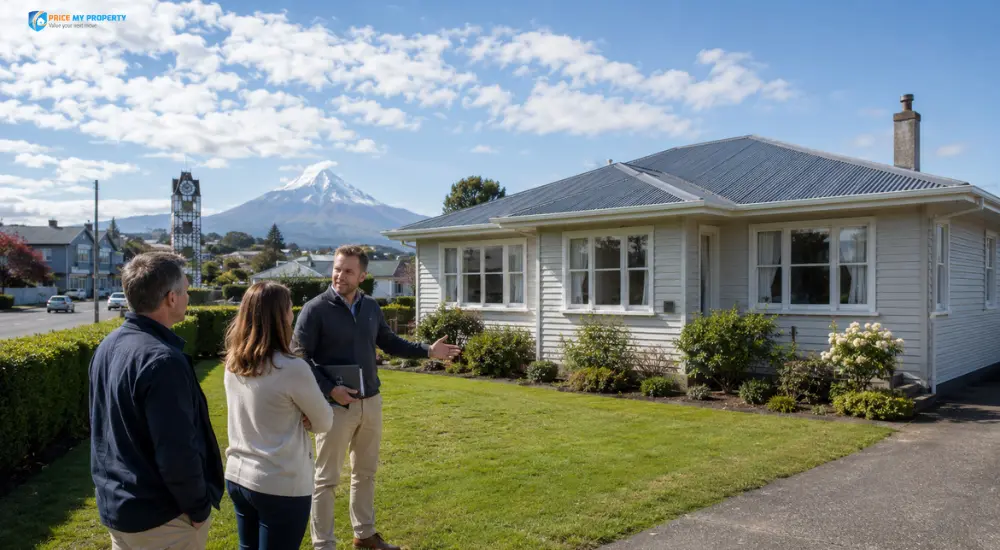
Stratford House Prices 2026: What Homeowners Should Know For Selling
Stratford house prices can give you a useful starting point, but they do not tell the full story of what your own home could sell for. In a smaller regional market, the final price can shift noticeably depending on property condition, section size, recent local sales, buyer demand, and how your home compares with nearby listings.
TL;DR
- Stratford house prices are best used as a guide, not a final answer. Your home’s likely selling range depends on recent comparable sales, presentation, land size, condition and current buyer demand.
- If you are preparing to sell, start with official New Zealand home-selling guidance, which explains the selling process and vendor obligations. Settled Selling a home guidance
- CV, RV and online estimates should be treated as context only. Official New Zealand guidance on working out what your house is worth explains why rateable values are mainly used for council rating purposes, not as live market prices. A settled guide to working out what your house is worth
- If you need to check legal ownership, title details or restrictions, official New Zealand property title guidance explains what is held on a property title. LINZ property title guidance
- Stratford sits within the wider Taranaki property market, so sellers should also understand how nearby areas, including New Plymouth, influence buyer expectations.
For a property-specific starting point, get a FREE Market Property Report from Price My Property before making pricing decisions.
What are Stratford house prices doing in 2026?
Stratford house prices in 2026 are shaped by the same forces affecting many regional New Zealand markets: interest rates, buyer confidence, lending conditions, local employment, property supply and the quality of homes available for sale. Broad price data can show whether the market is rising, falling or sitting flat, but it is only the first layer.
At the time of writing, March 2026 property value data referenced in Price My Property’s Taranaki market coverage reported the average price of a Stratford property at $492,147, with Stratford values up over the previous three months and also up year-on-year. That makes Stratford a useful part of the wider Taranaki conversation, especially for buyers looking for more space and relative affordability compared with larger urban markets.
However, one number should not be used as a final pricing guide. Stratford includes a mix of older homes, family houses, renovated properties, lifestyle blocks and rural-edge homes. A tidy three-bedroom home close to town can attract different types of buyer attention than a dated property needing work, even if both sit within the same broad local market.
If you own a home in Stratford and want a clearer property-specific starting point, get a FREE Market Property Report from Price My Property and compare it with recent local sales before deciding on a listing strategy.
Why Stratford house price data can be confusing
When people search for Stratford house prices, they often see several different figures. One website may show an average value, another a median sale price, and another an estimated value based on property data. These numbers can all be useful, but they do not measure exactly the same thing.
Average property value vs median sale price
An average property value can be pulled up or down by higher-value properties, lifestyle blocks or a small number of unusual sales. In a market like Stratford, where there can be a wide spread between entry-level homes and larger properties on bigger sections, averages need to be read carefully.
A median sale price shows the middle point of actual sales over a specific period. This can be useful because it reflects what buyers have recently paid, but it still depends on which homes sold during that time. If more lower-priced homes are sold in one month, the median may look softer. If several renovated or larger homes are sold, the median may look stronger.
Asking price vs sold price
The asking price shows what sellers hope to achieve. The sold price shows what buyers were prepared to pay. The two are not always the same.
For Stratford homeowners, this distinction matters. If similar homes are listed at one level but selling below that level, the market may be more price-sensitive than it first appears. If well-presented homes are selling quickly and close to expectation, that may suggest stronger demand in that part of the market.
When setting a price, look beyond current listings. Current listings show your competition, but recent settled sales show market evidence.
CV, RV and market value
CV, RV and capital value are often misunderstood. They can be helpful background information, but they are not the same as the current market value.
A rateable value is mainly used by councils for rating purposes. It may not reflect recent renovations, maintenance issues, buyer demand, presentation or what similar homes are currently selling for. This is especially important in regional markets where differences among individual properties can have a noticeable effect.
A realistic market value should consider recent comparable sales, the condition of the home, the land, the location, buyer demand and the sale method being used.
What affects house prices in Stratford?
Stratford property prices are not determined by location alone. Two homes in the same town can sell for very different amounts because buyers are comparing more than the address.
Property condition and presentation
Condition is one of the biggest value drivers. A warm, dry, tidy and well-presented home will usually create more buyer confidence than a property with obvious maintenance issues.
Buyers often look closely at roofing, cladding, piles, wiring, plumbing, heating, insulation, moisture and general upkeep. Cosmetic presentation also matters. Fresh paint, clean flooring, tidy gardens and good lighting can change how buyers feel during a viewing.
That does not mean every seller should renovate heavily before listing. In some cases, small improvements can be enough. In others, spending too much before sale may not be recovered. The key is knowing which improvements are likely to matter to Stratford buyers.
Section size and usability
Stratford buyers may place value on usable outdoor space, garaging, parking, sheds, fencing and family-friendly sections. A large section is not automatically more valuable if it is difficult to maintain or poorly laid out, but usable land can be a strong selling point.
For rural-edge or lifestyle-style properties, land quality, access, drainage, fencing and outbuildings can all affect buyer interest. Lifestyle properties should not be priced the same way as standard town houses because the buyer checklist is different.
Location within Stratford
Location still matters. Buyers may consider proximity to schools, shops, parks, workplaces, main routes and local services. Street appeal, surrounding properties, traffic noise and privacy can also influence perceived value.
A home in a convenient part of Stratford may appeal to families, downsizers or first-home buyers, while a quieter rural-edge property may attract a different type of buyer. The best pricing approach should reflect the likely buyer group.
Recent comparable sales
Recent comparable sales are one of the most useful pricing tools. The best comparisons are homes that are similar in property type, number of bedrooms, land size, condition, age, location, and presentation.
A broad Stratford average may be useful for context, but it will not tell you exactly how your property compares. A renovated three-bedroom home, an older weatherboard house needing work and a larger lifestyle property should not all be measured against the same simple average.
A Price My Property report can help you move beyond broad Stratford house price averages and start comparing your home with more relevant local evidence through a FREE Market Property Report.
Stratford compared with the wider Taranaki property market
Stratford should be understood as part of the wider Taranaki property market, but it should not be priced as if it were New Plymouth, South Taranaki or a coastal premium area. Each part of the region attracts different buyers and different price expectations.
Stratford within Taranaki
Stratford sits in central Taranaki and can appeal to buyers who want regional access, space and relative affordability. For some buyers, it may offer better value than larger city markets while still keeping them connected to employment, schools, services and lifestyle options across the region.
This regional position can support demand, but sellers still need to price carefully. A buyer comparing Stratford homes will usually look at recent Stratford sales first, then compare with nearby towns and larger Taranaki centres.
Stratford vs New Plymouth
New Plymouth is the main city in the Taranaki region and often attracts diverse buyer demand because of its employment base, coastal setting, amenities, choice of suburbs, and larger housing market.
That does not mean Stratford should be compared directly with New Plymouth’s higher-demand suburbs. Instead, sellers should think about how buyers may compare value. A buyer priced out of parts of New Plymouth may look at Stratford for more space or affordability. Another buyer may prefer New Plymouth for work, schools, beaches, or lifestyle.
For more regional context, read Price My Property’s guide to New Plymouth house prices 2026.
Stratford vs South Taranaki towns
South Taranaki towns can provide another point of comparison, especially for buyers weighing up affordability across the region. Areas such as Hāwera and other nearby towns may attract buyers with different budgets, work patterns or lifestyle goals.
This matters because Stratford homeowners are not only competing with other Stratford listings. They are also competing with the wider choices buyers can make across Taranaki.
Stratford house prices by property type
A useful Stratford house price guide should separate property types. Buyers do not view all homes in the same way, and neither should sellers.
Entry-level homes
Entry-level homes may attract first-home buyers, investors or downsizers. These buyers are often price-conscious and may compare several properties before making a decision.
Condition is important at this level. A home that appears affordable but needs major work may lose buyer interest quickly, especially if buyers are already stretched by deposit, lending and insurance costs.
Three-bedroom family homes
Three-bedroom homes often sit in the mainstream buyer market. Families may look for practical layouts, secure outdoor space, heating, insulation, garaging and access to schools or services.
A well-presented three-bedroom Stratford home can appeal to a broad pool of buyers, but pricing still needs to reflect current market conditions. If several similar homes are listed, buyers may become more selective.
Larger homes
Larger homes can attract families wanting more bedrooms, work-from-home space or long-term flexibility. They may also require a smaller but more specific pool of buyers.
If a larger home is dated, buyers may factor in renovation costs. If it has been well maintained or upgraded, it may stand apart from competing listings. The challenge is finding genuinely comparable sales, because larger homes may not sell as frequently as standard three-bedroom properties.
Lifestyle and rural-edge properties
Lifestyle and rural-edge properties should be assessed separately from standard residential homes. Land size matters, but so do access, fencing, water, drainage, shedding, maintenance requirements, and land usability.
A lifestyle buyer may be willing to pay more for privacy, views, space and practical infrastructure. However, they may also be cautious about ongoing maintenance costs. Good marketing needs to explain the lifestyle benefit clearly while pricing the property against the right comparisons.
Renovation properties
Renovation properties can attract builders, investors or buyers wanting to add value. However, buyer appetite depends heavily on the scale of work required.
A home needing cosmetic updates is different from one with structural, moisture, roofing or compliance issues. Sellers should be realistic about how repair costs may affect offers.
Because Stratford homes can vary widely in age, condition, and section size, Price My Property can give owners a practical starting point with a FREE Market Property Report before they speak with local agents.
How sellers should use Stratford house price data
The best way to use Stratford house price data is to start broad and then narrow down.
First, look at the wider Stratford market. Are prices generally rising, falling or steady? How many homes are available? How long are properties taking to sell?
Next, look at comparable sales. Focus on homes that are genuinely similar to yours. A recent sale is most useful when the home has a similar location, size, age, land area, condition and buyer appeal.
Then, look at your current competition. If buyers can choose between your home and several similar listings, your pricing and presentation need to be sharp. If your property has a clear point of difference, your strategy may be different.
Do not price based on one online estimate
Online estimates can be useful as a first check, but they are not enough on their own. They may not fully account for renovations, deferred maintenance, layout, outlook, street appeal or buyer demand.
A well-cared-for home may outperform a rough estimate. A home with hidden issues may underperform. That is why sellers should use several sources and seek local feedback before deciding on a selling range.
Use a written appraisal or market report before listing
Before listing, sellers should have a clear written view of where their property may sit in the market. A good appraisal or market report should refer to recent comparable sales, current listings and local buyer demand.
It should also help you think about the sale method. An advertised price, a price by negotiation, a deadline sale, a tender, or an auction can each shape buyer behaviour differently. The right method depends on the property, the local market and your goals.
If you are not ready to list but want a clearer view of where your Stratford home may sit, start with a FREE Market Property Report through Price My Property.
What Stratford buyers are likely to look at
Understanding buyers can help sellers make better decisions about pricing and presentation. Most buyers are not just asking, “What is this house worth?” They are asking, “How does this compare with everything else I can buy?”
Price compared with recent sales
Buyers often check recent sales before making an offer. If your home is priced well above similar sales, the marketing needs to justify why. That may be through renovations, land size, location, garaging, views, layout or presentation.
If the price feels unsupported, buyers may wait, negotiate harder or move on to another listing.
Maintenance and due diligence
Buyers may look closely at the building condition. Older homes can still perform well, but sellers should be prepared for questions around maintenance, insulation, heating, moisture, roofing and any unconsented work.
A clean, well-presented property with clear information can help reduce uncertainty. A home with obvious issues may still sell, but the price usually needs to reflect the work required.
Location and future resale appeal
Buyers also think about resale. Even if they plan to stay long-term, they may still consider whether the property will appeal to future buyers.
Location, access, street appeal, schools, services, parking and outdoor space can all play into that decision. Sellers who understand these buyer priorities can present their home more effectively.
Is now a good time to sell in Stratford?
There is no single answer that applies to every Stratford homeowner. The right time to sell depends on your property, your financial position, your next move and current local conditions.
It may be a good time to sell if your home is well presented, recent comparable sales support your expectations, and there is limited competition from similar listings. It may be worth pausing if major repairs remain unresolved, your price expectation is based solely on the CV, or you have not reviewed recent local sales.
Before making a final call, use Price My Property to get a free market report and check whether your Stratford home’s likely selling range supports your next move.
Quick seller checklist for Stratford homeowners
| Before you price your home | Why it matters |
| Check recent Stratford sales | Shows what buyers have actually paid |
| Compare similar homes | Property type, condition and land size can change value |
| Review current listings | Buyers will compare your home with active alternatives |
| Understand CV and RV limits | Rating values are not the same as the current market value |
| Check title details | Legal restrictions or ownership details can affect buyer confidence |
| Consider the right sales method | Price by negotiation, deadline, tender or auction can change buyer behaviour |
| Get a market report | Helps turn broad data into a more realistic selling range |
Final thoughts: Stratford house prices are only the starting point
Stratford house prices are useful, but they should not be treated as the full answer. A town-wide average can help you understand the market, but your own sale price depends on the specific property, recent comparable sales, buyer demand and how well your home is presented.
For Stratford sellers, the strongest approach is to combine market data with local evidence. Look at what has sold, what is currently listed, how your home compares, and what buyers are likely to value most.
FAQs about Stratford house prices
Q: What is the average house price in Stratford?
A: Average Stratford house price figures vary by source and date. Price My Property’s Taranaki coverage noted March 2026 QV-based data showing the average price of a Stratford property at $492,147. Use this as a market guide only, not as a final estimate for your own home.
Q: Are Stratford house prices going up or down?
A: Recent data suggests Stratford prices have shown some positive movement, but the exact answer depends on which measure you use, such as average value, median sale price, asking price or estimated value. Sellers should check the latest comparable sales before making decisions.
Q: Is Stratford cheaper than New Plymouth?
A: Stratford is generally positioned as a more affordable option than many parts of New Plymouth, but direct comparisons can be misleading. New Plymouth has distinct buyer demand, amenities, coastal appeal, and suburban variation. Stratford sellers should compare with local sales first.
Q: What affects the value of a house in Stratford?
A: The main factors include location, condition, land size, property type, presentation, recent comparable sales, current listings and buyer demand. Renovations, maintenance issues and title details can also affect value.
Q: Should I use CV or RV to price my Stratford home?
A: No. CV and RV can be useful context, but they should not be treated as the current market value. They are mainly used for rating purposes and may not reflect recent market conditions, renovations or buyer demand.
Q: How do I find out what my Stratford house could sell for?
A: Start by checking recent comparable sales, current listings and broad Stratford house price data. Then get a property-specific report or appraisal to narrow the range.
Q: Are lifestyle properties in Stratford valued differently?
A: Yes. Lifestyle properties need to be assessed differently from standard townhouses. Land quality, access, fencing, water, sheds, drainage and maintenance requirements can all affect value.
Q: What should I do before selling my Stratford home?
A: Check recent sales, review competing listings, understand your CV/RV limits, tidy obvious maintenance issues, check your title details and get a market-based report before setting your price.