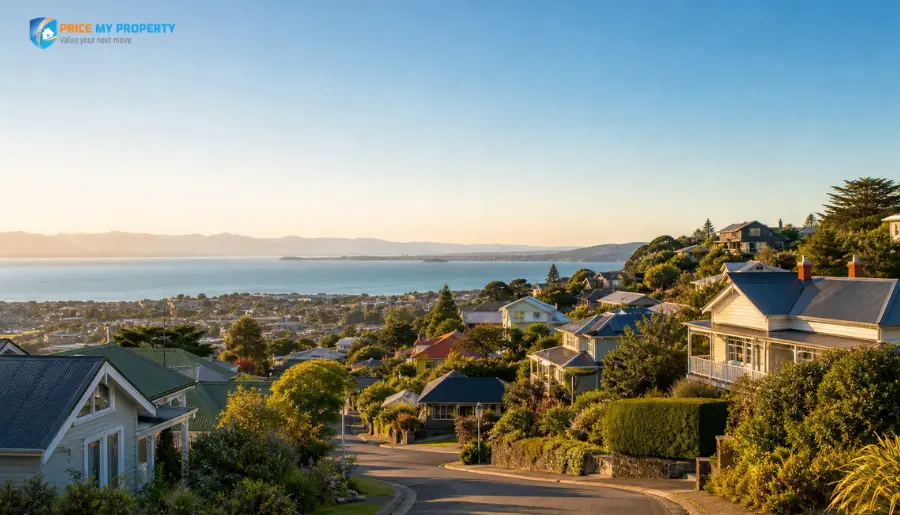

Manawatu Whanganui House Prices 2026: What Your Home Could Sell For
Manawatu Whanganui house prices are useful as a regional benchmark, but they will not tell you exactly what your own home could sell for. This guide explains what is happening across Palmerston North, Whanganui, Feilding, Levin and surrounding areas, and how homeowners can read the numbers before selling.
TL;DR
- Manawatu Whanganui house prices vary widely by city, town, suburb, property type and condition, so one regional median should only be treated as a starting point.
- For seller preparation, use the official Settled planning to sell guide, which explains property value, preparation and selling decisions.
- If rental demand matters to your decision, check the Tenancy Services market rent tool, but remember it is only a guide and should not be used alone to set rent for a specific property.
- Before signing with an agent, the Real Estate Authority’s appraisal guidance is useful because it explains written appraisals, comparable evidence and why an appraisal is not the same as a valuation.
- For a property-specific selling range, compare recent local sales, active listings, property condition and buyer demand, not just CV, RV or an online estimate.
What are Manawatu Whanganui house prices doing in 2026?
The Manawatu Whanganui property market is relatively steady in 2026, but the story changes depending on which part of the region you look at. March 2026 market data puts the regional median house price at $535,000, up from $229,500 ten years earlier. That gives homeowners a useful long-term view, but it does not mean every home in Palmerston North, Whanganui, Feilding, Levin, Marton or Ohakune is moving in the same direction.
Nationally, the March 2026 national House Price Index described the wider New Zealand market as broadly flat, with residential values down 0.1% over the March quarter and the average home value at $909,572. That matters because Manawatu Whanganui remains more affordable than many larger markets, but local pricing still depends heavily on demand, condition and comparable sales.
Before you rely on a regional figure, get a clearer view of your own property’s likely selling range with a free Price My Property report. It gives homeowners a practical starting point before speaking with agents or setting price expectations.
Manawatu Whanganui house prices at a glance
A common mistake is treating every property number as if it means the same thing. In reality, sellers will encounter several figures.
| Price measure | What it means | Best use |
| Median sale price | The middle sale price from settled sales | Broad market direction |
| Average value | Estimated average value across an area | General trend tracking |
| Asking price | What sellers are asking on current listings | Current competition |
| CV/RV | Council rating value/rateable value | Rates and market context only |
| Online estimate | Automated estimate | Quick starting point |
| Market appraisal | Agent-backed sale range | Selling preparation |
| Registered valuation | Formal valuation by a registered valuer | Lending, legal or complex situations |
A regional median can hide important property-level differences. A renovated family home in Palmerston North is not competing with an older cottage in a smaller township. A lifestyle block near Feilding will be judged differently from a compact rental in Whanganui East. Even two homes in the same suburb can sell differently if one has better sun, garaging, insulation, presentation or maintenance history.
That is why homeowners should also review practical ways to estimate how much their house is worth in NZ before making a pricing decision.
House prices by major cities and towns in Manawatu Whanganui
Palmerston North house prices
Palmerston North is the region’s largest urban centre and one of the most important property markets in Manawatu Whanganui. Demand is supported by education, healthcare, defence, logistics, professional services and family buyers who want access to schools, work and amenities.
Price My Property’s existing Palmerston North guide notes that recent February 2026 market data put the average Palmerston North home at about $637,870, with very little annual movement overall. For a deeper city-level breakdown, see the guide to Palmerston North house prices in 2026.
Suburb-level pricing matters in Palmerston North. Hokowhitu, Kelvin Grove, Milson, West End, Roslyn, Awapuni and surrounding areas can attract different buyer groups. Some buyers want school zones and larger family homes, while others want lower-maintenance townhouses or investment properties close to key services.
Whanganui house prices
Whanganui often appeals to buyers looking for character homes, affordability and a slower pace than larger cities. It can attract first-home buyers, retirees, investors and people relocating from more expensive centres.
March 2026 market data puts the average Whanganui property price at $524,930, with Whanganui values down 0.83% over the past three months and 0.62% over the past 12 months. Whanganui District Council also reported in March 2026 that the average home value was $529,000 after the latest rating revaluation, with average residential housing values easing 0.5% since the previous revaluation date.
That shows why sellers need local evidence. A well-presented home in Springvale, St Johns Hill or Otamatea may sit in a different buyer pool from an older property needing work in another part of town. Condition, flood risk, maintenance and insurance can all influence buyer confidence.
Feilding and Manawatū District house prices
Feilding and the wider Manawatū District appeal to buyers who want town convenience, family homes, town-edge lifestyle options and access to Palmerston North without living in the city itself. Rural service-town appeal remains important, but buyers still compare land size, commuting distance, school access and property condition.
March 2026 market data puts the average Manawatū property price at $605,405, up 3.30% over the past three months and 5.03% over the past 12 months. That suggests parts of the district have been firmer than Whanganui, although sellers still need suburb and property-specific evidence before setting expectations.
Levin and Horowhenua house prices
Levin and Horowhenua sit within the wider Manawatu Whanganui region and have their own drivers. Buyers may include local families, retirees, Wellington or Kāpiti movers, investors and people looking for more space at a lower price than larger centres.
In this market, transport links, property age, section size, maintenance and insurance can make a noticeable difference. A tidy, warm, low-maintenance home may attract different attention from a property that needs roofing, drainage, wiring or insulation work.
Rangitīkei, Ruapehu and smaller towns
Smaller towns such as Marton, Bulls, Taihape, Raetihi and Ohakune can offer more affordable entry points, but they often have thinner buyer pools than Palmerston North or Whanganui. That means recent comparable sales become even more important.
In smaller markets, one unusual sale can distort the numbers. A renovated character home, a lifestyle block, a former state house, a holiday property and a rural dwelling may all appear in the same broad area, but they will not necessarily compete for the same buyer.
Why Manawatu Whanganui property values vary so much
Location and buyer pool
Property values move differently because buyers are not all looking for the same thing. Palmerston North attracts urban employment and family demand. Whanganui attracts interest in affordability, lifestyle and character homes. Feilding benefits from town-and-country appeal. Levin can appeal to commuters, retirees and value-conscious buyers.
The wider the region, the more important it is to compare your property with recent local sales before setting expectations.
Property type
A standard three-bedroom home, a townhouse, a lifestyle block, a rural property, a rental, a character villa and a modern family home can all behave differently. Lifestyle buyers may focus on land, sheds, access and outlook. First-home buyers may focus on price, warmth and lending. Investors may focus on rent and maintenance.
Presentation and maintenance
Presentation still matters in a steady market. Buyers often compare homes online before deciding what to view. A clean, well-maintained property with good photos, clear documentation and obvious care can stand out.
Important value factors include roofing, cladding, insulation, heating, drainage, wiring, plumbing, kitchen condition, bathroom condition, flooring, garaging, sun and street appeal.
Supply and competition
Recent sales tell you what buyers have paid. Active listings tell you what buyers can choose from now. If several similar homes are listed nearby, buyers may have more leverage. If supply is tight in your price bracket, a well-priced home may attract stronger interest.
This is where property-specific guidance becomes more useful than a broad market figure. A homeowner in Whanganui, for example, may be competing against listings from very different areas, such as Palmerston North or Feilding.
Because every property is different, property-specific evidence is more useful than a regional average. A free Price My Property estimate report can help you understand how your home compares with local market evidence in your area.
Are Manawatu Whanganui house prices rising or falling?
The answer depends on the local area. The wider regional median has risen over the long term, while recent local movements differ between Manawatū and Whanganui. Manawatū was reported as rising over both three months and 12 months, while Whanganui was slightly down over the same short-term periods.
This is why sellers should avoid using old peak-market sales as proof of today’s value. A sale from 2021 or 2022 may not reflect buyer budgets in 2026. On the other hand, a single low sale may not define the whole suburb either.
The better approach is to build a current evidence range. Look at recently sold homes, then compare them to homes currently listed. Adjust for condition, location, land size, floor area, garaging, renovations and buyer appeal.
If you are unsure whether your home sits above or below the regional trend, request a property-specific report based on your address and nearby evidence rather than guessing from regional movement alone.
Higher-demand and more affordable areas in Manawatu Whanganui
The most attractive areas are not always the cheapest. Stronger buyer demand may be seen where homes are close to schools, employment, hospitals, shops, public transport, parks, or lifestyle amenities. In Palmerston North, family-friendly suburbs and well-presented homes can attract steady attention. In Whanganui, character, views, location, and condition can make a significant difference. In Feilding and rural edges, land, sheds and lifestyle features may matter more.
More affordable opportunities may be found in smaller towns, older housing stock, properties needing work or areas further from main employment centres. But “cheap” does not always mean good value. Lower prices can come with higher renovation costs, fewer buyers, longer selling periods, insurance concerns or weaker rental demand.
Sellers should think like buyers. A buyer does not only ask, “Is this affordable?” They also ask, “What will it cost me after settlement?” That includes repairs, heating, insurance, rates, commuting and future resale.
Selling a house in Manawatu Whanganui in 2026
The best selling decisions start with evidence, not a guess. A realistic pricing range should consider recent comparable sales, active listings, property condition and buyer demand.
When comparing your home with recent sales, focus on:
| What to compare | Why it matters |
| Same suburb or nearby area | Buyers compare local alternatives |
| Similar land size | Section size affects value |
| Similar floor area | Layout and bedroom count matter |
| Similar condition | Renovated and original homes price differently |
| Similar sale date | Old sales may no longer reflect the market |
Before choosing an asking price or listing strategy, request a free Price My Property market report. It can help you compare your home against recent local sales and avoid pricing based only on guesswork.
Do not rely only on CV or RV. Settled.govt.nz explains that rateable values are used by councils for rates and may not reflect improvements or current market value.
A clear pricing range also helps you make better decisions before speaking with agents, preparing the home for market or deciding whether now is the right time to sell.
Appraisal, online estimate or registered valuation: what do sellers need?
An online estimate can be useful for a quick starting point, but it may miss renovations, presentation, buyer demand, outlook, layout and maintenance issues. It is best treated as a rough guide.
An agent appraisal or comparative market analysis is more useful when you are thinking seriously about selling. Price My Property’s guide to Comparative Market Analysis NZ explains that a CMA uses recent comparable sales, current listings and local buyer conditions to estimate a likely sale range.
The Real Estate Authority says a written appraisal is required before prospective clients sign an agency agreement, and that an appraisal should reflect the property’s condition and be explained to the vendor. REA also states that an appraisal is not a valuation and that agents cannot rely solely on electronic appraisals.
A registered valuation is more formal and may be needed for lending, legal, estate, separation, trust or dispute situations. For a standard seller wanting to understand a likely market range, an agent-backed appraisal is often the more practical first step.
Manawatu Whanganui rental and investment context
Rental demand can still matter when selling, because investors may be part of the buyer pool. Palmerston North often attracts renters through education, healthcare, defence, and local employment, while Whanganui, Feilding, and Levin can appeal to renters seeking affordability and lifestyle.
For the rental context, check the Tenancy Services market rent tool, but use it as a guide only. Investors will usually look at rent potential, maintenance costs, healthy homes standards, insurance and yield, while owner-occupiers may focus more on presentation, layout, warmth and overall liveability.
What could affect Manawatu Whanganui house prices next?
Several factors could influence local house prices through 2026.
Interest rates and mortgage affordability remain important. When borrowing costs are high, buyers often become more cautious. When rates ease, more buyers may re-enter the market, but that does not always translate into immediate price growth.
Local employment also matters. Palmerston North benefits from its role as a regional service centre, while Whanganui, Levin, Feilding and smaller towns depend more on local buyer confidence, retirement movement, affordability and lifestyle demand.
Housing supply is another factor. If buyers have many similar homes to choose from, sellers may need to price more carefully. If listings are limited in a popular suburb or price bracket, a well-presented home may perform better.
Insurance, maintenance and climate considerations are increasingly important. Buyers may ask more questions about flooding, drainage, slips, older construction, roofing, moisture and long-term repair costs.
How to work out what your Manawatu Whanganui home could sell for
Use regional data as context, then narrow the research to your address, recent nearby sales and current competing listings.
Next, compare recent sales. Look for homes in the same suburb or a genuinely similar nearby area. Match bedroom count, floor area, land size, property type, condition and sale date as closely as possible.
Then review current listings. These are your competition. If your home is priced above similar active listings, buyers will expect a clear reason. That could be a better condition, location, land, renovations, views, garaging or development potential.
After that, adjust for presentation. A tidy, warm, well-documented home can give buyers confidence. Small improvements, such as cleaning, garden work, minor repairs, fresh paint touch-ups, and better staging, can make the property easier to assess.
Finally, get local input. If your home is unusual, rural, recently renovated, subdividable, near a risk area or in a thin market, broad online numbers may be especially unreliable.
Once you have checked broad market data, the next step is to make the research specific to your address. You can start with a free Price My Property report to get a more realistic view of what your Manawatu Whanganui home may sell for.
Common pricing mistakes Manawatu Whanganui sellers should avoid
- Using a regional average as your asking price is useful, but your Manawatu-Whanganui data, your suburb, property type, and condition matter more.
- Assuming every town follows Palmerston North trends: Whanganui, Feilding, Levin and smaller towns can move differently.
- Treating CV or RV as market value: Rating values are helpful background, but they do not show exactly what buyers will pay today.
- Ignoring active listings: Buyers compare your home with what else is available right now.
- Choosing the highest appraisal without checking the evidence: A strong appraisal should be backed by recent comparable sales and clear reasoning.
- Overpricing at launch: An inflated asking price can dampen buyer interest and prompt later price reductions.
Should you sell now or wait?
Selling now may make sense if you have a clear next move, your property is well presented, your price expectations are realistic and local competition is manageable. Waiting may make sense if you need to finish repairs, organise finance, resolve legal matters or improve presentation before going live.
The better question is not simply whether Manawatu Whanganui house prices will rise or fall. It is whether your home is likely to attract the right buyers at a price that works for your next step.
If you are weighing up whether to sell now or wait, start with your own property’s likely value range. A free Price My Property report request can help you make that decision with more confidence instead of relying only on regional house price headlines.
This gives your selling decision a clearer evidence base and keeps the next step focused on your own property.
FAQs
Q: What is the median house price in Manawatu Whanganui?
A: March 2026 market data put the Manawatu Whanganui median house price at $535,000. This is a useful regional benchmark, but it should not be treated as the value of every home in the region.
Q: Are Manawatu Whanganui house prices going up or down?
A: It depends on the local area. Recent data showed Manawatū values rising over three and 12 months, while Whanganui values were slightly down over the same short-term periods. Sellers should check current suburb-level evidence before setting a price.
Q: Is Palmerston North more expensive than Whanganui?
A: Generally, Palmerston North tends to sit above Whanganui because it is a larger urban employment and education centre, but the comparison depends on suburb, property type and condition.
Q: What are Whanganui house prices like in 2026?
A: Whanganui remains more affordable than many larger New Zealand centres, but prices vary by suburb and property condition. March 2026 market data put the average Whanganui property price at $524,930.
Q: Is Feilding a good place to buy property?
A: Feilding can appeal to families, commuters and lifestyle buyers because of its town feel and access to Palmerston North. Whether it is a good buy depends on the property, price, location, maintenance and your long-term plans.
Q: Is Levin part of the Manawatu Whanganui property market?
A: Yes. Levin is in Horowhenua, which is within the wider Manawatu-Whanganui region. However, Levin has its own market drivers, including affordability, retirement demand and links toward Kāpiti and Wellington.
Q: Is CV the same as market value?
A: No. CV or RV is mainly used for council rating purposes. It may be useful background, but it is not the same as what buyers are paying in the current market.
Q: How do I find out what my house could sell for?
A: Start by checking recent comparable sales, active listings and your property’s condition. Then get a local market report or appraisal supported by comparable evidence. Price My Property can help you get started with a free property report based on your address and local market conditions.
Q: Do I need a registered valuation before selling?
A: Usually not for a standard sale, unless a bank, lawyer, court, estate, trust, separation or other formal situation requires one. Many sellers start with an agent-backed market appraisal before deciding whether a paid registered valuation is necessary.
Ready to check your Manawatu Whanganui property value?
Regional house price data is useful, but your home’s likely selling price depends on local sales, buyer demand, condition and competition. Start with a free Price My Property report and get a clearer idea of what your property could sell for in today’s market.