Open Home vs Private Viewing in New Zealand: Best Choice In 2026
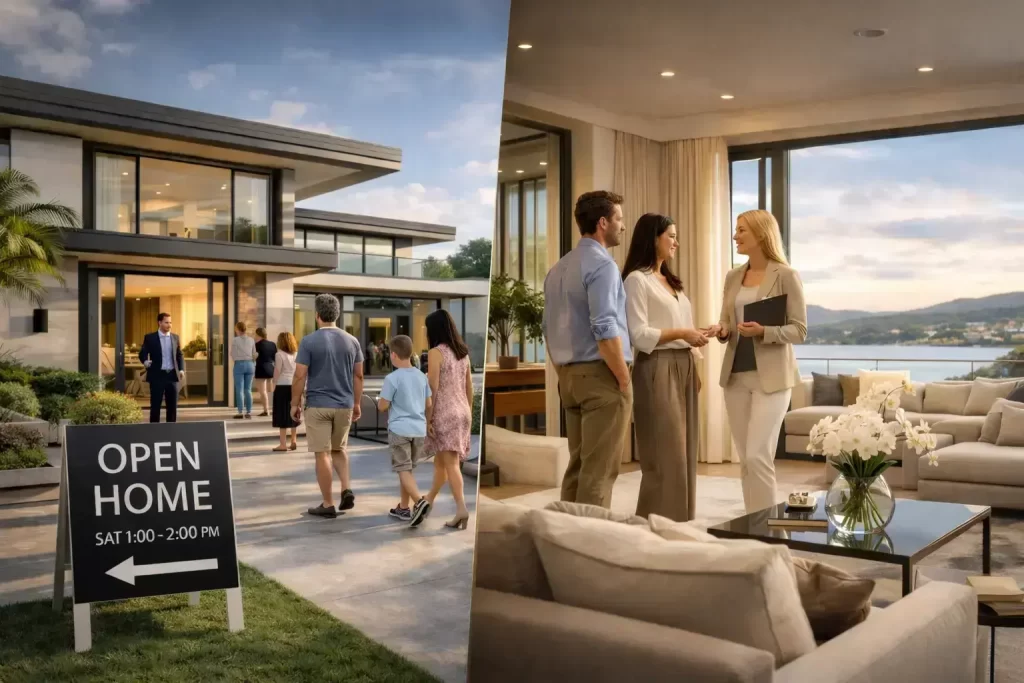
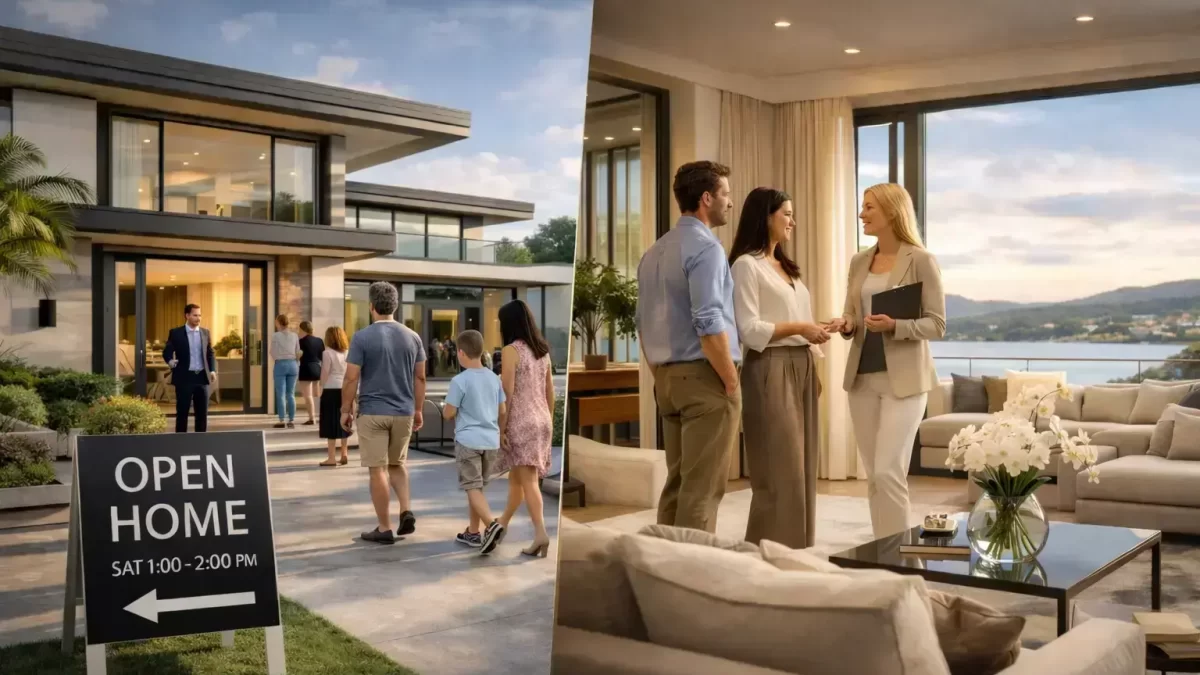
If you’re weighing Open Home vs Private Viewing in New Zealand, the choice usually comes down to reach versus control: open homes can maximise exposure and create competition, while private appointments give you more privacy, flexibility, and time for serious questions. In 2026, many sellers see strong results with a hybrid plan: one strong open home to generate demand, plus booked viewings for serious buyers.
TL;DR
- For Open Home vs Private Viewing, most NZ sellers do best with a hybrid: one open home each weekend, plus private appointments midweek for serious buyers (see Settled: what sellers need to know about open homes).
- Choose open homes for broad exposure, faster feedback, and “social proof” (multiple groups viewing).
- Choose private viewings for premium homes, privacy concerns, pets or children, security, or when buyers need time for due diligence. For buyer inspection prompts, use Settled: viewing an open home.
- Tenanted property: you generally need the tenant’s agreement for open homes, and tenants can refuse open homes and request viewings by appointment. See Tenancy Services: selling a rental property.
- Don’t forget compliance: open home registers involve personal information under the Privacy Act 2020 context. See Real Estate Authority: Privacy Act 2020 and open home registers.
Introduction
You’re trying to sell (or prepare to buy), and you’re stuck on a practical question: should you run open homes, private viewings, or both and what will actually help you get a strong result without turning your week into chaos?
This Open Home vs Private Viewing decision affects how many qualified buyers you reach, how private and secure the process feels, and how quickly you can move to an offer.
This guide helps New Zealand homeowners choose the right viewing format for their property type, timeline, privacy needs, and market conditions, using a simple decision framework and checklists you can act on today.
We’ll cover: when open homes outperform appointments, when appointments outperform open homes, how to use a hybrid strategy, what to prepare (security, info pack, inspection cues), and the NZ rules that can catch people out (privacy, tenants, health and safety).
Before you lock in a viewing plan, get a realistic price baseline using the Price My Property FREE Market Property Report.
Verification of Experience
Price My Property valuation reports are supplied by licensed New Zealand real estate agents; see how Price My Property works.
Mini case study (add your real data):
- Scenario: A typical owner-occupied home in a main centre (for example, Auckland, Wellington, or Christchurch).
- What you did: 1 weekend open home + 6 booked appointments across weekdays; updated listing photos after feedback; tightened price expectations using comparable sales.
- Outcome metrics to insert: enquiry-to-viewing conversion rate, number of second viewings, offer count, and time to first offer.
What we see in practice :
In NZ listings, the best engagement often comes when sellers use open homes to create demand and then use private viewings to convert serious buyers who want time for questions, measurements, and due diligence. The biggest drop-offs happen when information is missing (reports, disclosures) or scheduling is too rigid.
Quick Decision Aid
| Option | Best for | Main upside | Main risk | Effort level |
| Open home | Broad buyer pool, entry–mid homes, tight timelines | Reach + urgency from multiple groups | Privacy/security, casual browsers, limited 1:1 time | Low–medium (weekly prep) |
| Private viewing (appointment) | Premium homes, privacy needs, complex properties | Control + deeper buyer conversations | Less “buzz,” scheduling friction | Medium–high (more slots) |
| Hybrid (recommended) | Most owner-occupied NZ sales in 2026 | Reach + conversion | Poor coordination can waste time | Medium (structured plan) |
Use this Open Home vs Private Viewing decision table to pressure-test your expected sale range with local evidence, then start with the Price My Property free report.
Which format usually works best for NZ homeowners in 2026?
For Open Home vs Private Viewing in 2026, a hybrid approach often works best: run one consistent weekend open home to generate broad interest, then book private appointments for buyers who want a slower, more detailed look. This balances reach, privacy, and conversion while protecting your weekly routine.
A hybrid plan works because it separates discovery from decision-making. The open home gives buyers a quick first pass and helps you gauge demand, while private appointments give serious buyers the time they need to inspect carefully and ask better questions.
This matters because unstructured viewing campaigns usually create more admin and weaker signals. A simple sequence gives you fewer no-shows, faster follow-up, and clearer feedback about price, timing, and conditions.
Mini checklist:
- Run one open home each weekend at a consistent time.
- Offer 3–6 appointment slots for serious buyers during the week.
- Reserve at least one second-viewing window for top buyers.
When should you choose open homes over appointments?
Choose open homes when your priority is maximum exposure and momentum—especially for well-presented, mainstream properties where many buyers are still shortlisting. In NZ markets, open homes can create “social proof” and speed up decision-making, but you’ll need a security plan and a strong information pack.
Open homes support both discovery and competition. Buyers can quickly compare layout, presentation, and location fit, and sellers can create momentum when multiple groups attend the same viewing window.
This matters because a stronger turnout usually leads to better feedback, faster shortlisting, and more follow-up enquiries. Even buyers who are not ready to offer immediately may return for a private viewing if the first open home creates enough interest.
Pros and cons of open homes:
- Pros: broad reach, efficient time use, and comparable buyer reactions on the day.
- Cons: less privacy, crowd control issues, and less time for detailed questions.
Seller steps before an open home:
- De-personalise key spaces, secure valuables and personal documents, and tidy outdoor access.
- Use clear signage and a simple information sheet so buyers know the next step.
When do private viewings outperform open homes?
Private viewings (viewings by appointment) outperform open homes when you need control: higher-value homes, security concerns, difficult access/parking, pets, shift-worker schedules, or buyers who want detailed due diligence. Appointments give more time for questions, measurements, and follow-up—but require consistent availability.
Private viewings give buyers more one-to-one time, which often increases confidence for serious purchasers. They can inspect at a slower pace, ask detailed questions, and focus on condition, layout use, and practical fit without a crowd around them.
This matters because the buyers most likely to make an offer often need a second look or a quieter inspection. Appointments can reduce casual foot traffic and improve conversion to second viewings when the schedule is easy to book.
Common mistakes and edge cases to avoid:
- Offering too few appointment slots, which pushes buyers towards easier-to-view properties.
- Failing to follow up quickly, which lets buyer interest cool.
- Leaving long gaps between slots, which reduces weekly viewing capacity.
Suggested cadence:
- Use 15–20-minute appointment blocks, with a 10-minute reset buffer between groups.
How do you run a hybrid plan without it taking over your life?
A hybrid plan works when it’s structured: one fixed open home window (same day/time weekly), plus a limited set of appointment slots that you agree in advance with your agent. Keep appointments for qualified buyers (finance pre-approval, timeline clarity), and reserve one “second look” slot after each open home.
The key to a sustainable hybrid plan is a fixed routine. When buyers know the regular open home time, and you keep a limited number of appointment windows, the campaign feels organised instead of disruptive.
This matters because presentation quality drops when sellers are constantly preparing at short notice. A structured plan protects your time, reduces stress, and makes it easier to keep the home inspection-ready.
Simple weekly setup:
- Set one consistent open home window (same day and time each week).
- Offer a small number of appointment windows on specific weekdays.
- Ask qualification questions (timeline, budget range, conditions, and whether they need a second viewing).
- Keep one second-viewing slot available after each open home for top buyers.
What should sellers prepare before any open home or viewing?
Sellers get better outcomes when they prepare for both presentation and information. In New Zealand, buyers often ask early about documents and condition cues, so have your basics ready (property details, disclosures, report pathway) and reduce friction (cleanliness, lighting, safety). Preparation improves feedback quality and boosts buyer confidence.
Preparation is not only about presentation – it is also about removing information gaps that slow offers. Buyers lose confidence when they cannot get clear answers about the property, documents, or next steps after viewing.
This matters because delays and uncertainty often lead to lower-confidence offers or no offer at all. A well-prepared seller creates a smoother path from first viewing to follow-up questions and second inspections.
Checklist buckets to prepare before any viewing:
- Presentation: lighting, odours, moisture cues, clutter, and safe outdoor access.
- Security: valuables, medications, spare keys, and personal documents out of sight.
- Information pack: LIM, title search, building report pathway (where relevant), chattels list, and settlement preferences.
What should buyers look for at an open home vs a private appointment?
Open homes are best for fast shortlisting; private appointments are best for careful checking. NZ buyers should use open homes to assess layout, sun, neighbourhood noise, and obvious condition issues, then use a private viewing to confirm details (water pressure, windows, storage, exterior cladding condition) and ask deeper questions. On the second look, ask about building consents and Code Compliance Certificates (CCC) for any renovations, decks, or additions.
Treat an open home as a first pass and a private appointment as a verification pass. At the open home, buyers should focus on broad fit and obvious issues; at the appointment, they should slow down and confirm details that affect confidence and due diligence.
This matters because buyers often miss important condition cues in a busy open home. A structured second look reduces expensive surprises and helps buyers decide whether to progress to reports, builders, or an offer.
Buyer checklist by viewing type:
- Inside: damp smells, stains, switches, windows, bathrooms, storage, and signs of deferred maintenance.
- Outside: cladding cracks, drainage cues, paths and steps, retaining walls, and outdoor access.
- Neighbourhood: traffic timing, parking reality, sun and shade, and nearby noise sources.
What NZ rules and risks should homeowners know about (privacy, tenants, safety)?
Open Home vs Private Viewing plans should cover three practical compliance areas in New Zealand: privacy (open home registers collect personal information), tenanted access (you generally need the tenant’s agreement for open homes), and health and safety (hazards like slippery paths should be managed). Build these into your viewing plan early.
Sellers and agents usually get caught out when compliance is treated as an afterthought. Most issues are avoidable if privacy, tenancy access, and property hazards are built into the campaign plan before the first viewing.
This matters because small mistakes can create disputes, delays, or poor buyer experience. Clear processes protect trust and help the campaign run smoothly.
Common mistakes and edge cases:
- Collecting more personal information than necessary on open home registers, or not stating why it is collected.
- Assuming an open home notice solves tenancy access requirements.
- Ignoring obvious hazards such as slippery paths, loose decking, or uneven steps.
Practical steps:
- Use minimal register fields and a clear purpose statement.
- Agree on a tenant-friendly viewing schedule where the property is tenanted.
- Do a hazard scan before each viewing and fix or clearly mark anything risky.
How do viewing choices affect pricing, negotiation, and sale method?
Viewing format affects buyer confidence and competitive tension, which can influence price outcomes. Open homes can amplify competition when many buyers are shortlisting, while private appointments can increase confidence for higher-value offers that require detail. Your best move is to align your viewing strategy with pricing evidence and a clear offer process. In NZ, also plan for a multi-offer process if you’re expecting strong competition, so buyers know the timeline and what evidence matters.
Viewing format changes the balance between competition and confidence. Open homes can increase urgency when buyers see other groups through the property, while private appointments can support stronger offers when buyers need more detail before committing.
This matters because the wrong viewing setup can slow your campaign or attract low-confidence offers. The best approach aligns viewing strategy with your expected buyer pool, price evidence, and sales method timeline.
Decision heuristics:
- High-demand suburb and entry-level pricing: prioritise open homes, then offer private follow-ups.
- Unique or premium property: prioritise appointments and offer curated second viewings for serious buyers.
- If you’re choosing between auction, tender, deadline sale, or price by negotiation (PBN), use Price My Property’s pricing-by-sale-method guide to align your viewing strategy with how you’re selling.
- Compare 3–6 recent, like-for-like comparable sales before increasing viewing volume or changing strategy.
What scripts and follow-ups reduce wasted viewings and boost serious offers?
Simple scripts reduce casual browsing and improve conversion rates. Sellers (or agents) should confirm buyer timeline, finance readiness, and what they need next (docs, second viewing, builder). Buyers should request private appointments politely, reference the listing, and state availability. Fast, specific follow-up keeps momentum without pressure.
Specific follow-up messages work better than vague check-ins because they make the next step easy to answer. Buyers are more likely to reply when the question is clear and linked to a decision (documents, timing, second viewing, or offer readiness).
This matters because strong follow-up improves buyer quality and reduces scheduling loops. It also helps sellers identify who needs more information versus who is still only browsing.
Short templates you can use:
- Buyer text/email: ‘Hi [Agent Name], I saw the property at [address/listing]. Could I book a private viewing on [day/time]? I would also like to ask about [reports/settlement/condition].’
- Seller/agent follow-up: ‘Thanks for viewing today. What information would help you decide whether to make an offer?‘
- Second-viewing invite: ‘We have a second-viewing slot available on [day/time]. Bring any measurements or builder questions, and we can allow extra time.’
Conclusion
- Hybrid often works best: one consistent open home + booked private slots.
- Use open homes for reach and momentum; use appointments for depth and conversion.
- Prepare an info pack pathway and a safety/privacy plan from day one.
- If tenanted, plan access carefully and avoid assumptions about the open-home “notice.”
When you’re ready to choose Open Home vs Private Viewing for your campaign, sanity-check price expectations using Price My Property’s guide to estimating your home’s value so you can set viewing windows and negotiation steps with confidence.
FAQs
Q: Can I ask for a private viewing even if there are open homes?
A: Yes. In NZ, it’s normal to request an appointment if you can’t attend, need more time, or want a second look.
Q: Do open homes always get a better sale price?
A: Not always. Open homes can increase competition, but private appointments can increase buyer confidence—especially for premium or complex homes.
Q: Do I have to sign an open home register?
A: Often you’re asked to, but you can ask what it’s for and what data is required. Registers involve personal information handling.
Q: What if my home is tenanted and I’m selling?
A: You generally need to work with the tenant to agree on access for open homes and follow tenancy rules on viewings and entry.
Q: How many viewings should I allow per week?
A: Start with one weekend open home plus 3–6 appointment slots, then adjust based on enquiry quality and your household routine.